ACSL Completes Renewal of Class 1 Type Certification for PF2-CAT3, the Only Aircraft in Japan with Class 1 Type Certificate
- PF2-CAT3, the only unmanned aircraft in Japan to have obtained Class 1 Type Certificate under the current type certification system, completed renewal as of March 9, 2026.
- ACSL’s mass-production and quality management systems confirmed to comply with certification requirements.
- Renewal demonstrates ACSL’s organizational capability to continuously maintain safety and uniformity in design and manufacturing.
ACSL Ltd. (ACSL) hereby announces that it has completed the renewal procedures for the Class 1 Type Certification for its PF2-CAT3, originally obtained on March 13, 2023. The renewed certificate was issued by the Ministry of Land, Infrastructure, Transport and Tourism (MLIT) on March 9, 2026.
PF2-CAT3 became the first unmanned aircraft in Japan to obtain a Class 1 Type Certificate under the current type certification system when the system was introduced. This renewal is also the first-ever renewal of a Class 1 Type Certificate in Japan. Maintaining a type certification requires not only safety and uniformity in design and manufacturing processes but also the capability to continuously mass-produce aircraft in line with the certified specifications, supported by a strong understanding of the system. ACSL’s organizational systems were confirmed to meet these requirements, leading to the successful renewal.
■About PF2-CAT3
PF2-CAT3 (formal name: ACSL PF2-CAT3 Type) was developed specifically for Level 4 flight operations and became the first unmanned aircraft in Japan to receive a Class 1 Type Certificate in March 2023.
The type certification system is a regulatory framework administered by MLIT under the Civil Aeronautics Act. It examines whether the design and manufacturing processes of unmanned aircraft types intended for specified flights comply with safety and uniformity standards in terms of strength, structure, and performance. The system was introduced in December 2022 following revisions to the Civil Aeronautics Act that enabled Level 4 operations. For aircraft types with a Class 1 Type Certificate, certain inspections required for Class 1 Aircraft Certification—mandatory for Level 4 flights—may be partially omitted.
As the first aircraft in Japan to obtain a Class 1 Type Certificate, PF2-CAT3 has been used in multiple Level 4 demonstrations and continues to lead the real-world deployment of drone delivery.
| Model Name | ACSL PF2-CAT3 Type Class 1 Type Certificate and Class 1 Aircraft Certificate obtained |
| Dimensions | 1,174 mm × 1,068 mm × 601 mm (including propellers) |
| Weight | Maximum takeoff weight: 9.80 kg |
| Maximum Flight Time | 17.5 minutes (at maximum takeoff weight) |
| Maximum Speed | Horizontal: 10 m/s (36 km/h) Ascent: 3 m/s Descent: 2 m/s |
| Flight System | Electric-powered, autonomous control |
| Monitoring System | Flight behavior is monitored via GCS PC Supports alerts for abnormal conditions and emergency landing commands |
| Other Features | Equipped with emergency parachute Capable of carrying up to 1.0 kg of cargo Operable in wind speeds up to 10 m/s |
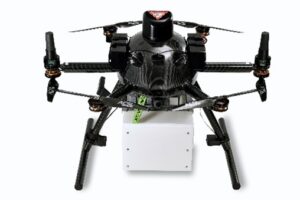
PF2-CAT3
■About the Type Certification Renewal
Maintaining and renewing a type certification requires:
・A stable mass-production system
・Uniformity in design and manufacturing processes
・Strict change-control and design-management processes based on a sound understanding of the system
Since the system was introduced, ACSL has engaged in ongoing discussions and examinations with MLIT, building organizational capabilities essential for maintaining type certifications. The successful renewal confirms that ACSL’s mass-production and quality assurance systems comply with the requirements of the type certification system.
Under its medium-term management policy “ACSL Accelerate FY26,” ACSL aims to become a “trusted global manufacturer supporting safety and security,” and has identified six key strategic pillars. The renewal of the PF2-CAT3 Type Certification directly supports the strategy of “Domestic infrastructure maintenance” and contributes to accelerating the real-world deployment of drone delivery and related services.
ACSL will continue contributing to solving challenges in logistics, inspection, and disaster prevention across social infrastructure sectors by providing certified aircraft and advanced operational support.
Please click here for the PDF